"The camera is an instrument that teaches people how to see without a camera." - Dorothea Lange
Showing posts with label holocaust survivors. Show all posts

Saturday, September 10, 2016

isak

2011

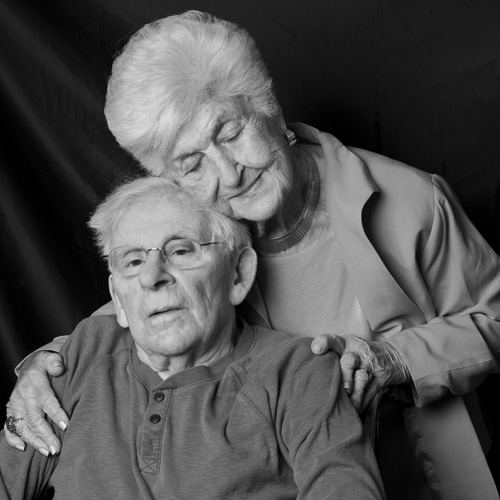
One of the most wonderful people I've ever known passed away last night. His name was Isak. Read his obituary, and you'll see that this was a man who was extraordinary in every sense of the word. A survivor, a man of conviction, a gentle and caring soul, a loving family man, a kind and dear friend. He was funny, charming, slightly irreverent and always generous. Next week, he and his lovely wife Ann would have celebrated their 70th wedding anniversary. (I took this picture of him at the celebration of their 65th.) They don't make 'em like this any more. Rest in peace, sweet Isak. The world was lucky to have you in it, and I am blessed to have known you.

Isak Federman came to Kansas City in 1946, the only member of his family to have survived the Holocaust. He was a successful businessman, a loving parent, and a generous supporter of the Kansas City Jewish community. He was a character, a dramatic and humorous storyteller who could take over a room and make friends instantly. He died on September 9, 2016, at the age of 94.


Isak was born on March 14, 1922, in Wolbrom, Poland, the third child of Boruch and Ruchla Biala Federman. His father died before Isak was a year old, and his mother eventually remarried Herschel Kalisz with whom she had a fourth child. Encouraged by his mother and stepfather, he left home at the age of thirteen to study at a Yeshiva (a school for Jewish boys), but returned home in the summer of 1939 amid rumors of a German invasion. After his village was occupied he was picked up on the street by the German SS in the fall of 1939, and ordered to help build a forced labor camp nearby. Eventually, he was forced to do slave labor in eighteen camps, including Rzeszow, Plaszow, Flossenberg, and Sachsenhausen. He built roads and barracks, worked in salt mines, and “pretended” to operate a lathe machine. He was also forced to clean up rubble from the German invasion of Russia, and later, he and other prisoners were marched into Berlin during bombing raids, and forced to clear rubble there as well. In 1944, he was shot in the head and wrist while escaping from the concentration camp at Bergen Belsen, near Hamburg, and survived in the forest for several days before being captured. He was liberated by the British Army on May 3, 1945, weighing about 80 pounds, and sick with typhus. 


After Isak had spent about six weeks in an army field hospital, he went back to Bergen Belsen, where a displaced persons camp had been established, in hopes of finding information about his family. He found no surviving family members, but he met Anna (Chana) Warshawski, who remained lovingly devoted to him for the rest of his life, as he was to her.

In December 1945, he heard a radio translation of a speech in which President Truman announced that 100,000 displaced persons would be allowed to immigrate to the United States. He encouraged Anna and her surviving family members to apply. In June 1946, they traveled to New York under the sponsorship of the American Jewish Joint Distribution Committee. When they arrived, the Joint representative suggested they move to Kansas City. In Yiddish, Isak asked him if Kansas City was in America; upon being told that it was, he said that they would go. That September, he and Anna, now Ann, were married, the first survivors to do so in the Kansas City area. Five hundred “strangers” attended their wedding, and they were embraced by the Jewish community in Kansas City. They were immediately invited to join Kerem Israel Synagogue, now Kehilath Israel. Over the years, Isak and Ann made a number of lifelong friends with whom they shared a commitment to Kehilath Israel. Isak served the synagogue in a number of ways, including as its President. He was actively involved in B’nai Brith and Jewish Federation of Kansas City, and was both a Mason and a Shriner. While he referred to himself as a “newcomer” (“green-ah” in Yiddish) he was bold and self-confident, a salesman who was hard to resist, genuinely liked by his customers, and a hard worker.

In 1948, while still learning the English language, he co-founded Superior Upholstered Furniture Company. He sold that company in 1976 and after being retired “for a weekend” became restless and started K.C. Textile Company, which he eventually sold in 1996. While he would point out that his secular education stopped after seven grades, he was an astute businessman, a dealmaker whose handshake was his bond. Indeed, he was a founding director of Lenexa National Bank, and was the Board Chair who led the negotiation of its sale to Commerce Bank.
In 1993, along with his good friend Jack Mandelbaum, he co-founded the Midwest Center for Holocaust Education, which teaches the history of the Holocaust as a means to counter indifference, intolerance and genocide.

Isak had always been reluctant to discuss his wartime experiences; despite that, he decided to share those experiences to help raise funds for MCHE. None of his friends were spared his pitch, as he and Jack worked to help build and finance an organization that continues to serve the entire community. He loved reading about and discussing current events and history, attending sporting events, and traveling with Ann. He was a patriot, proud to be a citizen of the United States and grateful to Kansas City for welcoming him when he had no home to return to.


In addition to his beloved wife Ann, he is survived by three children, Rachel Altman (Avrom), Arthur Federman (Diane), and Lorie Federman, by five grandchildren (Rebekah Altman, Audrey Federman, Carla Federman, Elijah Knight, and Maya Knight), and by seven great grandchildren. The family thanks the staff of Suites 2 and 3 at Village Shalom and that of Kansas City Hospice for their devoted care of Isak during the last years of his life. Special thanks to Sonia Warshawski for her love and support of Ann.


Tuesday, June 28, 2016

survivors

I've spent some time recently making portraits of Holocaust survivors who live in and around Kansas City. They will be added to the extensive archive of portraits and recorded accounts housed at Midwest Center for Holocaust Education. The last time I photographed our local survivors was in 2000 for the exhibition and subsequent book From the Heart: A Mosaic of Memories. At that time, their average age was 80. A few fell through the cracks or weren't sure they wanted to participate in the project. We're making an effort now to make sure all who are still living are included in this important body of work. Here are a few of my favorites from the past couple of sessions.


Sunday, April 17, 2016

rest in peace, johnny


I first met Zdenko (Johnny) Bergl while working on "Portrait 2000" for the Midwest Center for Holocaust Education. He and his wife, Evy, are Holocaust survivors. I photographed them both, and they became my friends.

Johnny was big and boisterous. His stomach shook when he laughed, which was often. He had colorful stories to tell, and he relished a good audience. I provided one, because he was as lovable as they come. I adored being around him.

We shared a love for photography, and he gave me his old Leica since he didn't use it anymore. He also gave me a lot of love in those huge bear hugs of his.

Johnny passed away on Friday. He was 86. Please take a moment to read a little about him here.


Monday, January 18, 2016

survivors

I am working on my "Voices of Wisdom" project for the Midwest Jewish Artist Lab which will involve photographing some of my Holocaust survivor friends (who have indeed been voices of wisdom for me over the years).

This past weekend I photographed Ann and Isak.


Tuesday, February 10, 2015

big sonia: love wins


Love Wins: Vigil for Reat Underwood and William Corporon, April, 2014


Last night Eddie and I held a small fundraiser for the movie "Big Sonia." I've been doing the photography for this indie film, which is being produced by Sonia's granddaughter, Leah Warshawski. Sonia is a friend. I've known her for about 30 years. She's a fascinating, gracious, colorful woman who has lived an amazing life. The film is ultimately about survival - and the fact that in the end, love wins.

I really believe in this project and am hoping enough funds are raised so that the film can be finished before Sonia's 90th birthday in November. Please read the following remarks I gave last night and watch the three-minute trailer for "Big Sonia". If you think you might be interested in donating money toward the production of this film, please let me know. I happen to have the link to the 10 minute trailer we showed last night (it's phenomenal!), and I've been given permission to share it. So I can send that your way, if you like. Any amount of money will help, but if you give at least $250 your name will appear in the credits! You can donate on the website.

A little over 30 years ago, shortly after moving to Kansas City, Eddie and I were invited to a Passover Seder by our new friends Art and Diane Federman. Soon we were going to their house for Shabbat dinner and then again to help build the sukkah. The Federmans quickly became part of our extended family. Every time we celebrated a Jewish holiday at their house, there was always Aunt Sonia – a curvy, petite woman with big hair, a heavy Polish accent, lots of carefully applied make-up, a well-tailored brightly colored suit, a leopard print accessory and plenty of bling. Aunt Sonia was quiet, but when she spoke, every head turned. She always contributed something wise or funny and whip smart at some point during the dinner conversation. She also made a mean gefilte fish.


Sonia Warshawski at John's Tailoring Shop, 2000


I got to know Sonia even better in the year 2000 when I made her portrait for the book From the Heart, A Mosaic of Memories. That was the first time I ever went to her tailoring shop. I was seduced not only by Sonia, but by all the bits and scraps of herself that adorned the tables, walls, shelves and every nook and cranny of the small space where she – yes, WORKED – but also HELD COURT each day from 9 – 5. Sonia dispensed as much advice and good will as she did sewing services.

When I heard from the Federmans that there was a movie being made about Sonia, I jumped at the opportunity to help. I met the producer, Sonia’s granddaughter, Leah, and talked my way into the job as still photographer. I have believed in this film from the start, and I am proud to be part of it. I am donating all of my photographic services, and Eddie and I have made a financial contribution, as well. We believe in hope, tolerance, respect and love. We think you do, too, and that’s why we are asking for support of this film.

The movie being made by Leah is called “BIG SONIA,” which, of course is kind of funny when you consider that 89-year-old Sonia is only 4 foot 8 (not including her hair). I have grown to love and admire Leah and her very talented co-producer, filmmaker and husband Todd Soliday. They are telling Sonia’s story with humor, wit, style and heart – all qualities that describe the woman herself.


Sonia in her car, 2014

We’re very lucky tonight because we get to see a ten-minute trailer for the movie. Not many people have seen it yet. I think you’ll agree that the portrayal of this important and special woman – one of the last in Kansas City who continues to speak publicly about her experience during the Holocaust – is sweet and tender, yet very powerful. It’s a movie that needs to be seen by a wide audience. Sonia, the ultimate survivor in every way, preaches tolerance, respect and love. Which part of our society, and who among us, doesn’t need to be reminded of the importance of these virtues?

A coincidence happened this past weekend. (Well, my friend Shea would say there is no such thing as a coincidence.) Someone put me in touch with Mindy Corporon. On April13th last year, her 14-year-old son Reat and her father Bill were killed outside the Jewish Community Center in Overland Park. Simply on their way to Reat’s audition for a singing competition, they were victims of a hate crime, even though they were not Jewish. The words called out by the shooter, a white supremacist, were “Heil Hitler.”

When asked about the shootings last year, Sonia said to anyone who would listen: “We cannot let hate take over love.”

Or, as another Holocaust survivor, Bronia Roslawowski (of blessed memory), once told me: “If I am angry and live my life hating, then the haters will have imprisoned me, and they will have won.”

During my first email exchange with Mindy on Saturday afternoon, I learned that she had asked a woman named Sonia Warshawski, who she did not know yet, to speak at one of the events surrounding the one-year anniversary of the shooting. That’s when we discovered a whole string of connections.

It is so meaningful, and I am so honored that Mindy Corporon is here tonight. Her mantras are “FAITH WINS” and “LOVE WINS.” Well, so were Bronia’s, and so are Sonia’s. Mindy told me that she and her husband recently introduced their 12-year-old to the Holocaust during their visit to the Holocaust Museum in Washington. Their son learned for the first time that millions of people have already been killed and affected because of the same hate and ignorance that killed his brother and grandfather - and knowing that his family is not alone is helping him move forward. Mindy and Sonia haven’t met… yet. I believe she and I were introduced at just the right time, and I’m really grateful for that.

Now Leah, Sonia’s granddaughter, is going to show the trailer. Afterward, she’ll speak about the film and then answer any questions you may have. You know why you’re here – to learn about BIG SONIA and to offer financial support for its production. So after Leah is done, I will ask you to get out your checkbooks.

Thanks for coming. This is the first time I’ve ever done anything like this, so you know it must have a very special place in my heart.

So… please check out the "Big Sonia" website, watch the trailer (and let me know if you'd like to see the longer one) and consider making a donation so the film can be completed. The folks in the room last night were totally won over by the Sonia and by the movie (when the trailer ended, there was applause and cries of "we want to see more!"). I hope you will be won over, too.


Thursday, July 17, 2014

ida


These are stills from Pawel Pawlikowski's film "Ida." I saw this stunning film last night and have not been able to get the images, setting and characters out of my mind. Not that I really want to.


From the NYT review by David Denby: "We are so used to constant movement and compulsive cutting in American movies that the stillness of the great new Polish film 'Ida' comes as something of a shock. I can’t recall a movie that makes such expressive use of silence and portraiture."


Again, David Denby: "Clearing away clutter, Pawlikowski almost never moves the camera; many of the scenes are just long-lasting shots, fed by a single light source that often puts the faces in partial shadow (what we understand of these two women will always be limited). Sometimes the figures are positioned at the bottom of the frame, with enormous gray Polish skies above them, as if the entire burden of a cursed country weighed on its people."

These are only a few of the starkly haunting images that crushed me last night. Please go see the movie so you, too, can be moved and inspired by 80 minutes of gorgeous black and white photography on a movie screen. It's a sad, bleak tale - one that revisits one of the darkest moments in history and which raises difficult questions surrounding those who survived it.

You can read Denby's review here.


Friday, February 28, 2014

sonia

I have a friend called Sonia. She goes to work every day at her alterations shop, John's Tailoring (named for her husband). The shop is located in a mall that has all but died. There's still a Topsy's Popcorn, a movie theatre, a Sears and a Macy's (which recently announced it will close) and a steady stream of jogging-suited mall walkers. Other than that, there's Sonia.

But she's a big presence, in a gentle, warm, dignified kind of way.

Sonia's 89. Her workday is longer and fuller than most of my 50 and 60-something peers. She listens to NPR all day, and she'll engage you in any and all kinds of conversation. She's always impeccably dressed. She drives a big Oldsmobile. (And I happen to know she's famous - at least in the eyes of family and friends -  for her homemade gefilte fish.)

I hadn't seen her for a while, but last week I took one of my photo students to her shop. Kat wanted to make some pictures of Sonia in her shop.

A Holocaust survivor, Sonia is one of the last in the KC area to still make public presentations about her experiences during the war. She and her family were rounded up in 1939 and transported to a concentration camp. Only she and her sister would survive. She endured brutal beatings. From the Auschwitz concentration camp, she survived a death march to the concentration camp of Bergen-Belsen where finally, allied troops liberated the prisoners on April 15, 1945. As she celebrated, a German soldier shot her in the chest.

Sonia was featured on the local news yesterday. You can watch it here.

I photographed her back in 2000 when I was working on a project for the Midwest Center for Holocaust Education. In the shop, of course.


And I made a quick portrait last week before my student got started.


In the photo Sonia's holding, she's in her 20's.

Sonia's a lovely, fascinating woman. I have always been inspired by her. And I feel really lucky to know her.


Sunday, April 08, 2012

passover


Last night Eddie and I had the honor and pleasure of celebrating Passover with old friends (who are like family). At one point during the Seder, it became clear to me just how fortunate we are to have created our own "family" in Kansas City, because when we moved here 32 years ago, we knew no one.

I was also struck by that the fact that among the 17 people seated around the table, there were three Holocaust survivors. How lucky I have been to have Ann, Isak and Sonia in my life all these years. They have inspired me and taught me so much about the goodness and sweetness of life.

Sunday, October 02, 2011

65th anniversary


This past week was Ann and Isak Federman’s 65th wedding anniversary. Yesterday and last night was the big celebration. I was privileged to be able to participate, and I was very honored to make their portrait.

Ann and Isak are two of my favorite people - a couple I've long admired, loved and been inspired by.

They are fixtures in the Jewish community in Kansas City. They moved here only months before they married.

“We were on the second ship out of Germany,” Ann recalled in a recent KC Jewish Chronicle article. “We didn’t know what we were doing or where we were going to go, and after we got to New York, they sent us to Kansas City.”

"Ann is from Bendzin, Poland. In 1942 she was sent to a labor camp in Czechoslovakia along with her sisters, Gertrude and Lola. Ann was 20 when she was liberated in 1945.

Isak was born in Wolbrom, Poland. During the war he was imprisoned in 17 different concentration camps, including Bergen-Belsen. Sick and weighing only 80 pounds, Isak left Bergen-Belsen following the liberation.

A Jewish doctor in the British army took Isak under his wing. After spending a couple of months in a British hospital, Isak decided to return to Bergen-Belsen.

Following the war, Ann, Gertrude and their brother, John, also went to the Bergen-Belsen Displaced Persons Camp to search for other family members. (Lola did not survive the Holocaust. Both of Ann’s parents died shortly before the Holocaust.) Isak and John had met during the Holocaust, and found each other again at the DP camp. It was through John that Isak met his beloved Ann.

It was Isak’s idea to come to the United States. Isak, Ann and their traveling party — totaling 10 people — were on the ship for almost two weeks. An American Jewish social service organization welcomed them when they arrived in New York. They were taken to a hotel and told they were going to Kansas City because it was a nice place.

They came to Kansas City with each other. Other than that they had nothing.

Soon after they arrived, Isak became friendly with Rabbi Tibor Stern. Within a couple of months, the rabbi suggested to Isak that it was time to marry Ann.

As Ann recalls, it was the rabbi who actually proposed to her.

“He called me and asked me when is a good time to get married. I said anytime. So we did,” Ann said.


Because they were set to be the first Holocaust survivors to marry in Kansas City, the entire Jewish community was invited to the wedding. More than 500 people attended the ceremony on Sept. 22, 1946, three months after they arrived here. Ann was 21 years old; Isak was 24.

The ceremony itself wasn’t as joyous as the couple had hoped. In fact, Ann doesn’t even like looking at her wedding photo, because she remembers people crying tears of sadness at the wedding. That’s because Rabbi Stern chose to focus his speech on the horrors of the Holocaust, not the happiness of the day or the happy times that would be ahead for the couple.

“The rabbi gave a eulogy at our wedding,” Ann said.

Their past was indeed horrendous. All of Isak’s immediate family — two sisters, one brother, his mother and his stepfather — perished in the Holocaust. Several members of Ann’s family did survive the Holocaust and eventually two brothers and a sister — John (whose wife, Sonia, still lives and works in Kansas City), Aron and Gertrude moved to Kansas City. All of Ann’s siblings are now deceased.

Together Ann and Isak had three children and five grandchildren. A year ago their great-granddaughter was born.

The Federmans built a wonderful life for themselves. Isak was a successful businessman and Ann an amazing mother. Both have always been active in community service. Isak and his friend Jack Mandlebaum founded the Midwest Center for Holocaust Education.

My family and I have celebrated countless Jewish holidays with the Federmans over the years. My children have had the benefit of "surrogate grandparents" in them. We've built sukkahs together, sung songs at Passover together, shared challah on Shabbat together and enjoyed Bar and Bat Mitzvahs and weddings together. Their family has been such an anchor for ours.

To say that Ann and Isak are special, amazing, kind, loving, inspiring, beautiful people is simply an understatement.

Happy Anniversary you two. I love that you still always hold hands.

(In this post I have used a lot of information and several quotes from the Jewish Chronicle article, which was written by editor Barbara Bayer.)

Friday, November 26, 2010

looking for inspiration?


"Former concert pianist Alice Herz-Sommer is living proof of the power of music. The world's oldest Holocaust survivor, who celebrates her 107th birthday today, endured the deprivations of the Prague ghetto, imprisonment in a Nazi concentration camp and the murder of her husband, mother and countless other family members. Only her love of music, she says, sustained her throughout those years of darkness and heartbreak.

While her tale of survival is astonishing, what's perhaps more remarkable is that, despite seeing humanity at its worst, Sommer remains a fierce optimist and a believer in the fundamental goodness of mankind. 'This is the reason I am so old, even now, I am sure. I know about the bad things, but I look only for the good things. The world is wonderful, it's full of beauty and miracles, art and music.'

As for her own long life, Sommer partly puts this down to diet -- she eats chicken stew most days, and doesn't touch coffee, tea or alcohol -- and to her strict piano-playing routine. But there is a more important factor. 'In a word: optimism. I look at the good. When you are relaxed, your body is always relaxed, When you are pessimistic, your body behaves in an unnatural way. It is up to us whether we look at the good or the bad. When you are nice to others, they are nice to you. When you give, you receive.'" - AOL News

"Dancing Under the Gallows" a film about Alice, is soon to be released.

To read more about this remarkable woman, go here.

Sunday, July 18, 2010

bronia

(Exercise class at the Jewish Community Center, 2003)


Bronia’s was the second funeral I attended this week.

During the service her son, daughters and a grandchild told “Bronia stories” and spoke in “Bronia-isms.” I laughed, cried, then laughed again.

Bronia’s son Walter talked about her questionable driving skills. He recounted the time his children were young and first went on a drive with her. When they came home they said they never wanted to drive with their grandmother again. Not only was she a bad driver, she kept honking the horn, and this caused people to turn and stare.

Their dad knew right away what the kids were talking about. He reminded them to consider Bronia’s size. Yes, it was true, he told us. Whenever he rode in the passenger seat with his mom, the horn was always honking. It wasn’t because she was warning people to get out of the way (though that might have been a good idea) - it was because, with various stops and turns, her chest would often heave toward the steering wheel, and well, the sheer weight and force of it would sound the horn.

I conjured up the familiar image of Bronia, short of stature and wide of girth, wedged into the driver’s seat of her car, her eyes barely clearing the top of the dashboard.

Walter told us about a day shortly before Bronia died. He was at her bedside in the hospital.

Walter: Are you okay, Mom? Can I do anything for you?

Bronia: I’m so uncomfortable. Lower the bed a little, would you?

He cranked the bed down a bit.

Walter: Is that better?

Bronia: A little more.

He turned the crank again.

Bronia: Oy, just a little lower.

Finally, Walter figured out what his mother was up to.

Walter: Mom, you want to get out of bed, don’t you? Sorry, but you can’t. Remember, you have a broken leg. If you try to walk right now, it could break again.

Bronia (who always managed to get her way): If you let me get out of bed, I promise… I will walk VERY LIGHTLY.

If I could have told a Bronia story, it would have been hard to choose just one, but it might have been this:

Not so long ago I took Bronia to Operation Breakthrough so she could speak about her experience during the Holocaust to a group of teenagers. As we were leaving the building, a woman (all lit up with a huge grin) approached Bronia with outstretched arms. “Oh my gosh! I haven’t seen you in years. You used to run the bakery, didn’t you? You made my wedding cake. It was in 1977. Remember me?”

Bronia didn’t miss a beat. Even though she was exhausted and drained from the talk, she beamed back at the woman. “Of course. It’s so nice to see you again!” They hugged each other, and the woman kept exclaiming how unbelievable and how great it was to see the bakery woman again after all these years. Clearly, running into Bronia had made her day.

As Bronia and I walked to the parking lot, I asked her if she really remembered her old customer. She shrugged and smiled and said, “She’s such a lovely person.”

That was the thing about Bronia.

In spite of the darkness and the evil and the sadness and the loss that had been a major component of her life, she was a proponent of love.

Everyone was lovely.

Life was lovely.

And those firmly held beliefs made Bronia one of the loveliest people I have ever had the privilege of knowing.

Her daughter, Judy, told us that the whole family was at Bronia’s bedside as she died. They had their arms wrapped around one another, encircling the bed, and they huddled close. They started singing some of Bronia’s favorite and beloved old Yiddush songs. So that’s how my friend died, being surrounded by and lifted up by family and music and memories.

How lovely is that?

I’ll miss Bronia.

Me and the 500 other people who were at her funeral. We really will.

(I stand corrected... 700 other people! If you have a Bronia story or memory you'd like to share, please leave it a as a comment so we can all enjoy.)

Thursday, July 15, 2010

bronia


Bronia Roslawowski, age 88, of Kansas City, died July 14, 2010, at Menorah Medical Center. She was born in Turek, Poland, on December 23, 1921, to Hersh and Bluma Kibel. As a child, she was educated at Beis Yaakov. During World War II, Bronia was imprisoned in several Nazi concentration camps including Auschwitz. After being liberated by the United States Army (for which she was always grateful to America), she worked with the Army in displaced persons’ camps. In 1948, Bronia immigrated to the United States. Not knowing where to settle, she asked where President Truman was from and decided that if Missouri was a good place for the president’s family, it would be a good place for hers. In her early years in Kansas City, she had many jobs including caring for newborns at Baptist Hospital. She often worked three jobs to support her children. For many years, she and her husband Mendel owned M & M Bakery where Bronia passed out love and doughnuts to generations of children, and bread and sandwiches to their families. She was proud of the success of all of those who worked with her, particularly those who continued in the bakery business. Bronia frequently spoke to schools and community groups about her experiences during the Holocaust, teaching messages of love and justice. “I don’t hate the Nazis,” she would say, “so no one has the right to hate.” She taught that she was saved by righteous Jews and non-Jews alike. “Look out for your neighbor because, if you don’t, no one else will.” Bronia was unfailingly loving, and she herself was loved by people from every part of the community. As she always said, “What a baker puts into the oven, she takes out of the oven.”

Monday, February 15, 2010

bronia

I recently paid a visit to my friend Bronia. This led me to reconsider a portrait I made of her in 2003. I always liked it, but the watch she was wearing really dominated the frame. This morning I cropped out that watch, something I would never have done back in the day. Working with images on the computer has definitely loosened me up.

Wednesday, November 04, 2009

bronia at operation breakthrough

A couple of weeks ago I was at Operation Breakthrough working on a project, and I struck up a conversation with three young women about my various photographic series. They were really interested in my work; we ended up going to the computer lab and looking at my website. They asked great questions and were so interested in what I do. What proved to be the most fascinating to them was "Among the Ashes." After looking at that work, we started talking about the Holocaust. When I told these thirteen and fourteen year olds that I could arrange for them to meet someone who had actually survived the Holocaust, they could hardly believe it. One thing led to the next, and today I took my friend Bronia to Operation Breakthrough to speak to a group of about 20 young teens. The three young women who inspired the event are pictured here with her. Since they are approximately the same age that Bronia was when she was rounded up by the Nazis and sent to a labor camp, I think they were especially moved.


This is how I introduced Bronia.

"Bronia was born eighty-three years ago in the small town of Turek, Poland. She was named Brucha, which means 'blessing' in Hebrew.

When Bronia was a young girl, she lived in a neatly kept brick house with her parents and brothers and sisters. She played the violin, liked to ride her bike, make up plays, help in the garden and in the winter ride on a sleigh pulled by her Russian husky dog.

All pretty normal things in a pretty normal life.

She and her family had lots of friends, both Jewish and non-Jewish. They spoke Russian, Polish, German and a little French. Bronia’s mother was a kind woman who made food for the needy and never spanked her children.

Bronia doesn’t have any pictures of her mother and cannot remember her face. But, of course, she thinks about her – and the rest of her family – every day.

When she was thirteen, the Germans marched into her small town and eventually forced all the Jewish people out. Two years later, after living in horrible conditions in a ghetto, Bronia volunteered to take her sister’s place when the Germans came to the house to select people to go to work in a labor camp. For the next two years, Bronia lived in a barn with 150 other women and had to clear swamps and work on farms. She was sent to three different concentration camps, the last of which was Auschwitz-Birkenau.

After being there a year, she was loaded onto a truck that was taking its cargo to the gas chamber. She escaped…. by jumping off the back of the truck and landing in a snow covered ditch. She returned to the barracks at the concentration camp and was kicked - nearly to death - for what she had done. Later that year she was sent to another labor camp. Finally, Bronia was forced to go on a death march and was one of only 19 women from Auschwitz to survive and be liberated.

Bronia never saw any of her family again, except for one cousin.

She left Europe and came to Kansas City in 1947 where she trained as a nurse. She chose Missouri because of Harry Truman. She and her husband eventually opened the M & M Bakery at 31st and Woodland. She has three daughters, a son and several grandchildren.

Bronia doesn’t hate anyone for what happened to her. She has devoted her life to spreading the message that what matters most in the world is that we respect each other’s differences and that we love and take care of one another."

Monday, August 17, 2009

little brown monkey

Remember the man in the yellow hat? And the naughty, irrepressible little brown monkey and all the mischief he got into?

I do. I must have read those books 4,000 times each to Max when he was a little boy. His favorite was the one where Curious George bakes a cake. George and the man in the yellow hat go over to Jimmy’s mom’s house to help bake cakes. Naturally, George turns the kitchen in to a huge mess when the mom goes upstairs for a little while and leaves him on his own. He makes up for it all, though, and becomes the hero in the end when he bites into the baked cake and finds the necklace Jimmy’s mom had just discovered was missing. Always in and then out of trouble was George. Each and every time, Max thought that was hilarious.


More than three generations of Americans have grown up reading these stories. But few people know about the incredible journey made by George's creators, Margret and H.A. Rey, to escape the Nazi invasion of Paris at the start of World War II. Stashing a few precious belongings and manuscripts in their knapsacks and the baskets of their bicycles, the Jewish couple fled Paris in June 1940, starting a five-month odyssey by bike, train, and boat that would eventually bring them to American shores.

The Midwest Center for Holocaust Education is bringing an exhibition about the Reys to Kansas City this October. The show, entitled “Saving the Little Brown Monkey”, is making its first stop of a five-year tour here. The show explores the Rey’s early creative collaborations and traces how the story of George himself (originally called “The Adventures of Fifi”) spanned the wartime period. The monkey emerged as a character in one of the Rey's pre-World War II stories, and the manuscript that became Curious George was already in progress by 1939. However, wartime constraints on printing as well as the general turmoil of the period prevented the original contract from being fulfilled.

When the Reys were forced to flee Paris along with thousands of other refugees in advance of the German occupation, the manuscript and illustrations for the book were among the few personal possessions they managed to take with them. Escaping via Spain and Portugal, then across the Atlantic to Brazil, the Reys finally reached the United States in October 1940. A month later, they received a new contract from Houghton Mifflin for “The Adventures of Fifi”, later re-titled “The Adventures of Curious George.”

Eddie and I are heading up the docent-training program for the exhibit. If you’re interested in learning more about this opportunity, let me know.

Wednesday, June 24, 2009

important mission

I am on the board of the Midwest Center for Holocaust Education. This sixteen-year-old organization endeavors to teach the history and lessons of the Holocaust to people of all races and religious beliefs throughout the Midwest to perpetuate understanding, compassion and mutual respect for generations to come.

I first became involved with this not-for-profit when I worked on the project “Portrait 2000.” The photographs and subsequent interviews became the material for the book entitled “From the Heart” which documented the stories of fifty Holocaust survivors who lived in the Kansas City area at that time.

In honor of those survivors, I’d like to share with my blog readers this column by Steve Penn published in yesterday’s Kansas City Star.

“The way the Midwest Center for Holocaust Education sees it, the shooting at the Holocaust museum in Washington might just as well have been a shot across its own entrance.

The local center sees the assault as an affront against all Holocaust education.

Educating the public on the reality of the Holocaust is what the Midwest Center for Holocaust Education is all about. This week, a group of teachers will participate in classes given by the center aimed at increasing their knowledge of Holocaust history.

The classes have taken on a heightened sense of urgency after a white supremacist entered Washington’s Holocaust museum recently, fatally shooting a security guard.

The suspect is James W. von Brunn, an 88-year-old white supremacist from Maryland.

Jean Zeldin, executive director for the Midwest Center for Holocaust Education, said the center’s goal is to teach the history of the Holocaust, applying its lessons to counter indifference, intolerance and genocide.

‘Our purpose … is to educate people so that when the deniers put forth their propaganda, that people know better,’ Zeldin said. ‘We’re probably not going to change the minds of deniers themselves. But we can equip the people who are hearing that stuff with the truth.’

Zeldin said von Brunn was beyond educating.

‘Here you have an 88-year-old man who wouldn’t have raised an eyebrow at airport security,” she said. “But he was so full of hatred. This had been festering for years.’

Zeldin said the Midwest Holocaust center is in solidarity with Washington’s Holocaust museum.

‘I’ve personally been to the Holocaust museum dozens of times,’ Zeldin said. ‘Chances are I met the security guard on one of my visits. You were walking into a place that’s pretty much hallowed ground.’

The wide media attention the story received is a testament to Holocaust education.

‘The fact that so many people feel connected to this and not just Jewish people is amazing,’ Zeldin said. ‘It grabbed the attention of the world.’

Zeldin said the shooting is an example of why the center’s mission is so important.

‘All that our center can try to do is reach those people who minds are still formative,’ she said.

Society can be lulled into complacency. But every now and then an incident occurs that serves as a wake-up call. The shooting at the Holocaust museum only inspires the Midwest Center for Holocaust Education to continue its message.”

Monday, April 20, 2009

a book about bronia

On Sunday, Eddie and I hosted a reception and book signing for author Maureen Wilt and the special woman who is the subject of her book. "Love the World" is a children's book that tells the story of Holocaust survivor and well-loved Kansas City super star, Bronia.


This is a true story about a woman who refused to live her life forever imprisoned by the Nazis. Once liberated from the concentration camps, Bronia embraced love for others just as robustly as she did her new-found freedom. Using wonderful illustrations and easy to understand language, "Love the World" inspires readers to treat others with tolerance and respect.


There was quite a turnout for Bronia's book party. She has many friends and fans and has touched countless people, young and old. She held court with each person who finally made it to the front of the line and carefully personalized the front page of each book they bought. A warm hug and heartfelt greeting was extended to each and every admirer.


I feel lucky that Bronia and I have been good friends for many years. She has brought a lot of joy and inspiration into my life.

You can buy a copy of the book here.

Wednesday, February 04, 2009

update: holocaust denier

"The Vatican, bowing to the growing furor over Pope Benedict XVI's decision to accept a return to the church of a prelate who denied the Holocaust, made a dramatic turnaround Wednesday and demanded the bishop recant.

The Vatican sought to distance the pope from the controversy by saying he did not know about British Bishop Richard Williamson's views when he agreed to lift his excommunication last month.

In the surprisingly public spat, some leading cardinals in Germany and at the Vatican blamed unidentified aides for not fully briefing the pope.

Rabbi Marvin Hier, founder of the Simon Wiesenthal Center in Los Angeles, said he took Benedict at his word that he didn't know about Williamson's views, but said he couldn't believe Vatican aides didn't do more research to better inform the pope.

‘This was absolutely a matter that was bungled at the highest levels of the Vatican,’ Hier said. ‘If they Googled the name Bishop Williamson, they'd find out he was a Holocaust denier. This did not require advanced research at the Vatican Library or Oxford.’

‘Everybody knows he's an anti-Semite,’ since Williamson has been vocal about his views, making speeches and publishing a blog, Hier said. ‘The other Holocaust deniers are rabid, anti-Semites who can't claim any legitimacy. But when a person calls himself bishop and he was invited back into the Catholic Church by none other than the pope, he brings with him an aura of legitimacy. And that legitimacy stains the pope. So the pope today finally made the right decision, that (Williamson) must recant.’"

- Victor L. Simpson, Associated Press

Tuesday, February 03, 2009

holocaust denier


Over the weekend, Pope Benedict XVI lifted the excommunication of Richard Williamson, a British bishop who denies that Jews were killed in Nazi gas chambers and has resisted the reforms of Vatican II. Click on this link to watch part of a disturbing interview with the bishop.

Jack Mandelbaum is a friend of mine. He's a Holocaust survivor and the co-founder of the MIdwest Center for Holocaust Education. Jack helped me with the arrangements for my trip to Poland in 2003 when I was working on the photographs for Among the Ashes. This morning his "letter to the editor" about Richard Williamson's views appeared in the Kansas City Star:

"Holocaust-Denying Bishop

I must respond to Bishop Richard Williamson’s claim that not one Jew died in gas chambers (1/28, A8, 'The defense doesn’t rest; Vatican stresses pontiff’s record of denouncing the Holocaust'). He also claims there were no gas chambers. Oh, how I wish he was right.

I am the sole survivor of my immediate family. If his statement were correct, my mother, age 42, my sister, age 17, and my brother, age 10, would have died of natural causes in old age. Instead, their lives were smothered in the gas chambers of Auschwitz and Belzec. After suffering the horror of Stutthof concentration camp, my father was also murdered.

Denying the Holocaust was ruled to be a sin by Pope John Paul II. Bishop Williamson was excommunicated from the church by Pope John Paul II, yet now the Vatican is bringing him back into the fold. This is an outrage!

I’m 82 years old. I have difficulty accepting the fact that educated people would try to rewrite history in my lifetime. Can’t these revisionists at least wait until we survivors are dead to rewrite history?

Jack Mandelbaum"

The above photograph is one I took for Jack when I was photographing at Stutthof. It is a memorial stone he placed in the former gas chamber itself.

Wednesday, July 09, 2008

learning about the holocaust

Bronia and me

Last night we took our friend Bronia to a presentation at a local school. It was given by a high school senior and her English teacher, both of whom had been part of an intense group tour of Germany, Poland and the Czech Republic to study the Holocaust. We watched a video about the trip, heard remarks from both the student and teacher and then sat through a Q & A. It is always inspiring to witness the enlightenment of a new generation when it comes to something like this horrific part of our history. It was obvious that this young woman, along with the other twelve students on the trip, had been changed by what she learned. It was obvious that she and her new friends will work hard to teach others about the importance of tolerance, compassion and respect.

When the presentation ended and people were starting to get out of their seats, Bronia rose - and in her low, strong, Polish accented voice, said, “I was there.” Everyone turned to her, and she thrust her arm out so all could see the tattooed number. The room grew quiet, and then she started to tell a little bit of her story. It was the perfect way for the young girl who had just talked about her trip, as well as those who had come to hear her, to (literally) see history in the flesh.

Going anywhere with Bronia is an adventure, a surprise and always turns into a lesson of some sort.

We went for ice cream afterwards. She said she hadn’t done that in a long time.