"The camera is an instrument that teaches people how to see without a camera." - Dorothea Lange
Showing posts with label Baker Gallery. Show all posts

Thursday, March 21, 2013

the baker gallery


Abbie, Gloria and Andre Kertesz in front of the gallery, c. 1983 (photo by Diane Covert)

My solo show, the preparation for which is beginning to consume most of my waking hours, has been dubbed a “mid-career retrospective.” This means two things: I am at the mid point of my career, and I have enough stuff under my belt to warrant a long look back.

I do have many years to contemplate, especially considering how young I was when I first picked up a camera. No one is quite sure who gave me that first camera, a Rocket Brownie, but whoever it was gave me the gift that just kept on giving! It became attached to my 2-and-a-half-year-old right wrist, where it often dangled like a new piece of treasured jewelry. It was, of course, just the first of many cameras to follow.

It hasn’t been only the cameras and the pictures I took with them that have made this first part of my photographic journey so wonderful. It’s also been the people I’ve met along the way.

Fast forward to my mid-twenties, when I had the chutzpah to open a photography gallery in my new hometown of Kansas City. I did it because I loved being around photographs, photographic books, posters, postcards and photographers. For ten years, I was privileged to surround myself with stacks of prints by people like Cartier-Bresson, Levitt, Robert Adams, Siskind, Arbus, Evans, Cunningham, Doisneau, Kertesz, Meyerowitz, Leibovitz, Josephson, Pfahl, Uelsmann, Dater and Mann. On Saturdays, the gallery would fill up with photographers from the area – people like Loftis, Koch, Kilmer, Tarnowski, Gutowski, Covert, Hamilton and Sutton. Folks sat around looking at prints, books and magazines and chewed the fat about all things photography. Collectors would stop in: Hollander, Berkley, Meeker, Anderson, Nerman, Kaufman and Davis.

It was a special time in my life. I was blissfully wrapped up in being a new mom who adored her role as parent and a businesswoman who had no fear. I made biannual trips to New York for the auctions at Sotheby’s and Christie’s. I brought in guest artists and lecturers, had book signings, organized competitions and sponsored photo workshops. It’s crazy when I look back on it. I didn’t really know enough to start the business, much less run it, but I dove in (ignorance is bliss??) and loved every minute of it.

Even though I had just received my MA in photography prior to opening the "Baker Gallery," I didn’t have time during those years to make my own pictures. The Hasselblad was shoved into a drawer at that point. It would be fifteen years before I reached in, grabbed it and started shooting again.

But what I learned during those heady days of running the local photography gallery was exciting, educational, invaluable and irreplaceable. 

I wouldn’t trade that part of my career for anything.


Saturday, November 13, 2010

richard loftis: part one

I first met Richard E. Loftis shortly after I opened the Baker Gallery in my home in 1981. This wasn’t long after Eddie and I had moved to Kansas City and given birth to our daughter, Abbie. The first exhibition I installed in the living and dining rooms of our home was a collection of Edward Weston prints that I managed to borrow from a guy in Colorado. The second show was an impressive selection of Ansel Adams photographs (“Moonrise Over Hernandez” included) that I consigned from the Tom Halsted Gallery in Detroit.

One of the first people to come see these shows was a guy named Richard - a tall, gangly 40 something man with a goofy laugh, a head over heels passion for photography and a portfolio of prints tucked under his arm. He knew more about Weston and Adams than I could ever hope to know. He spoke the zone system like it was his first language. Richard traveled to many of the same spots where those F64 guys photographed, and he would set up his 8” x 10” view camera to try his hand at capturing some of the same Western scenes.

Richard was one of the friendliest people who came through the doors of my newly open photo galley, the first of its kind in Kansas City. He’d been waiting for a place like this for a long time. Here he could hang out with other photographers, who slowly but surely began to learn of the existence of the Baker Gallery. He could look through the flat files and see the work of photographers he admired. He showed up at every Sunday afternoon opening reception, and sometimes during the week by appointment (well, it was supposed to be by appointment, but he just kind of showed up knocking at the door). His excitement was contagious. His laugh bellowed, and his tall frame and white hair commanded a second look. It wasn’t long before he was a fixture at the place.

Richard talked about technique, gear, papers, chemicals, light meters, lenses, films, tripods and enlargers to just about anyone who’d listen. He was an engineer and knew how to build things, how things worked and how to fix just about anything that broke. He could spend the afternoon discussing the properties of infrared film, the pros and cons of selenium toning or the benefits of shooting in the sharp, contrasty bright sunlight. He loved sharing his thoughts, ideas and advice with all my clients. Richard would frequently hop in his van and travel to Bryce Canyon, Taos or the Garden of the Gods to lose himself in photo heaven. Then he’d come back to my gallery with a box full of pristine, perfectly printed, mounted and spotted gelatin silver prints matted in pure white rag boards. He was a master darkroom printer. (There was always a pair of white cotton gloves in the box, mind you.)

Photographing in Death Valley

I took him on as part of the stable of the Baker Gallery. I promoted and showed his work; soon there were collectors of Richard’s work in and around Kansas City. This fed his desire to make more work, to push himself harder and further. He told me I had lit a fire. He read everything he could get his hands on. He was self-taught, after all, and there was always so much more to learn. He had received his first camera for Christmas when he was eleven years old and had to pretty much figure out on his own how the thing worked.

Richard did well. He established quite a name for himself and had some shows outside of Kansas City. His work was purchased by some major collections and impressive individual collectors. He concentrated mainly on landscapes, airplanes and figure work, primarily in black and white. He was envied for his masterful shooting and printing techniques; he was asked to teach at Johnson County Community College. He was an enthusiastic and popular instructor.

Speaking at the opening of his 50 Year Retrospective

When the digital age dawned, Richard was one of the first to jump on board. He quickly discovered that digital capture allowed him to finally get the color he had always wanted (but had never quite achieved) with film. This guy was like a kid in a candy store when it came to all things digital. So many tools! So many controls! Not only did he educate himself, he took the time to impart his knowledge to those of us who were terrified and intimidated about making the jump from film. He was a generous and patient teacher.

He served as mentor to me when I struck out to make my own pictures after closing The Baker Gallery. Richard built my wet darkroom back then, and in more recent years, he built my digital darkroom. We were members together in a seven-person photo salon that met periodically to talk shop, eat barbeque and critique each other’s work. We celebrated our birthdays together. We traded prints. He took my son Max to his first air show.

Needless to say, over these thirty years, he and I have became very dear friends. There wasn’t anything we wouldn’t do for the other.

Last spring Richard was diagnosed with pancreatic cancer. Our photo salon has rallied around him and tried to help him through this horrible detour in his life. In June, he opted for major surgery, from which he has never fully recovered. The cancer has now spread to his liver.

This past Monday, after months of excruciating pain and the inability to graduate from a feeding tube to the dinner table, Richard was moved to Kansas City Hospice.

Tuesday, July 07, 2009

old letters, etc.

Going through boxes of old papers and memorabilia (in preparation for our garage sale) means coming across things I haven’t seen or even thought about for a long while. This has included a couple of boxes that hearken back to the Baker Gallery years (1981 – 1992.) Today I waded through lots of old cancelled checks, inventory sheets and invoices. I think the most fun was stumbling upon correspondence with various artists and photographers. (That, and the interaction I had with collectors and photo enthusiasts was the best part of the whole gig.)

My exhibition of Jerry Uelsmann photographs was one of the most enjoyable shows I did. Uelsmann was a cheerful, unassuming and delightful artist with whom to work. He sent me letters on the back of work prints. This was one of his notes, on the backside of a beautiful. but not quite up to par, silver print.


I've already written about my reverence for Helen Leviit. I put together an exhibition that included her, Cartier-Bresson and Walker Evans - one of my all-time favorite shows. Of the three, Helen was the only one with whom I corresponded directly (Evans was no longer alive and Cartier-Bresson had a rep.). Helen was totally accessible and very dear to me. This is a postcard I received from her at some point after the show had come down.


One of the sweetest photographers with whom I dealt directly was Aaron Siskind. From the start, he reminded me of my dad.


This is a good example of how low the prices were in the early to mid 80's for photographs by well known photographers. Winogrand's work was available then for what now seems like a song. It was a great time to be collecting photographs! This work now, if even available, is several thousand dollars per piece.


The biggest jump in price perhaps (of the work I carried) has been the group of Arbus prints that I showed in the early 80's. Clients from back in the day often ask me, "Why didn't you, I, we buy the whole show?!" My response is, "It's all relative. $600 or $700 seemed like a lot of money for a photograph back then." Some of us were lucky and did buy them. They cost, of course, tens of thousands of dollars now... if you can even get your hands on one. Here is the inventory sheet for the show I did.


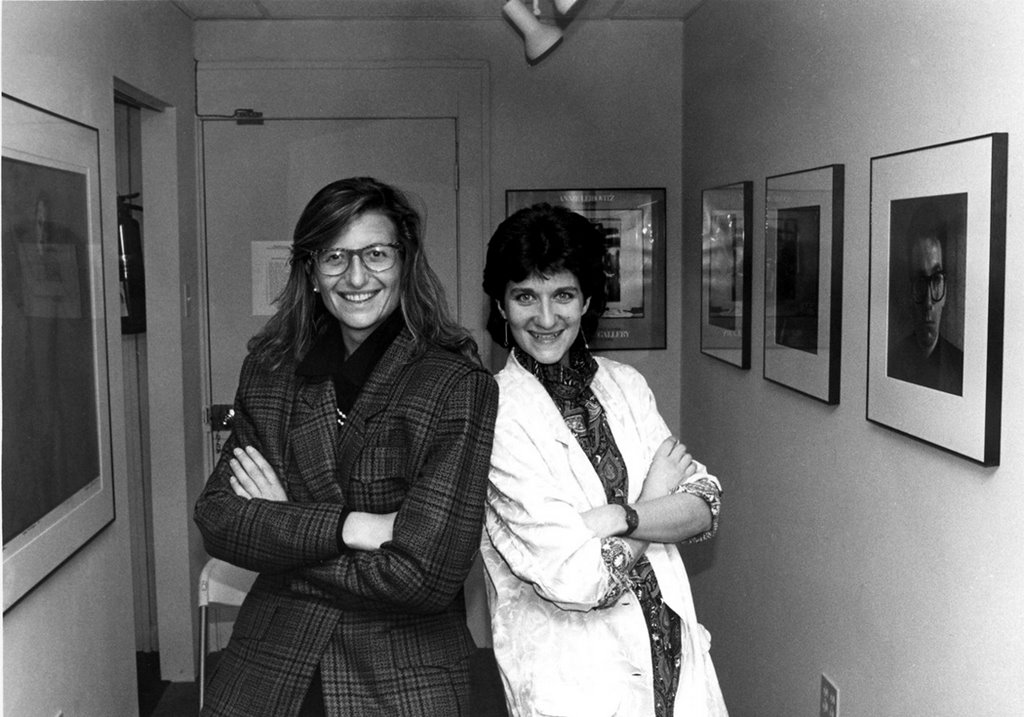
The two Annie Leibovitz shows I did really put me on the map in Kansas City. For the first show, in 1985, I brought her to town to do a book signing at the opening reception. That weekend was a blast! This photo of Annie was taken in front of the gallery by photographer John Trotter. I has completely forgotten about this gift from him until I bumped up against it in the box of Baker Gallery goodies I explored in my basement today!

Sunday, March 15, 2009

baker gallery, bloch museum, abbie, crewdson...

When I opened my gallery in 1981, there wasn’t a lot of photography action going on in Kansas City and its environs. Collectors here were just beginning to understand the important historical significance of vintage work and the excitement of discovering contemporary images by emerging and mid-career photographers. Hallmark had been actively assembling its major photo collection since the 60’s, but that work was only occasionally seen by the public. Hard core fans had to travel to Chicago, New York or LA if they wanted to see the good stuff on a regular basis.

My place, the Baker Gallery, helped fill in the gaps as much as a small art gallery could do in those early days. Over the years, though, more and galleries began to show photography, and museums ramped up their photo show schedules. The Society for Contemporary Photography (now defunct) was born in a Kansas City collector’s basement in the late-80’s and went on to become a nationally recognized organization. The Kansas City Art Institute continued to build its strong photography program, and more and more talented graduates began renting studio and loft spaces in the area, contributing to a plethora of fascinating exhibitions. Kansas City was truly ready for what took place in 2006 when The Nelson-Atkins Museum of Art acquired the Hallmark Photographic Collection. The collection spans the entire history of photography, from the birth of the medium in 1839 to the present. At the time of its acquisition, it included more than 6,500 works by 900 artists, with superb examples by virtually all the key American photographers in history. The collection is housed in the Bloch Building, which triumphantly opened in 2007 to resounding applause from the architectural community worldwide. With the acquisition and the move into this spectacular building, the Nelson-Atkins took its place as one of the premier museums in the world for photography. A great coup for Kansas City and its photography lovers!

I have been privileged to witness and be part of the exciting growth of, acceptance of and enthusiasm for the medium in this great Midwestern city. We’ve definitely come a long way. This past Thursday night, I joined other photo enthusiasts in a packed auditorium at the Nelson-Atkins Museum's Bloch Building to hear a conversation between April Watson (associate curator) and the wildly popular photographer Gregory Crewdson. The Crewdson presentation was made possible by the museum’s Photo Society. I looked around and saw people I’ve known for a long time, people who used to park themselves in chairs at my gallery on Saturday afternoons to talk about photography, to browse through books, to explore the flat files and to hang out with other photo-lovers.

Thursday night I found myself marveling at how our patience and persistence has paid off; we now have the world famous Bloch Building with its world famous collection and its world class curatorial staff right here in our own back yard! Between Keith F. Davis, April Watson and Jane Aspinwall, the collection could not be in better hands.

(Just so you know how full circle this whole thing is for me, I am posting this photo of my daughter Abbie.


She was three years old and was hard at work helping me get the Baker Gallery spruced up for the grand opening of its new location on State Line Road back in 1983. And that wildly popular photographer who spoke Thursday night and then came to my home for a reception in his honor? Abbie’s advisor/professor when she obtained her photo degree from Yale in 2003.)

If you live in the Kansas City area, get ye to the museum. If you don’t, plan a trip to do just that.

Monday, January 21, 2008

photo salon

It is very easy to feel like you’re working in a vacuum as an artist. You make new pieces, leave them around the house for family and visiting friends to see, maybe lug them down to your gallery, always (in my case, anyway) post them on the blog. But it can often feel as if no one is responding, and you have no idea what feedback there might be and how that might have an effect on where you’re going with the work.

Now that the digital age is upon us, it’s also really easy to get hung up on computer and Photoshop issues.

That’s why I love the photography salon I am in. We are a group of eight or so. Most of us have known one another since the early 80’s when I started my gallery. We are a grab bag of professions – a surgeon, a lawyer, a baker, an architectural photographer, a photo curator/historian/author, a fine art/portrait photographer, etc. But we all have a passion for photography – whether it is making it, studying it or collecting it.

We gather every couple of months to look at each other’s new work, talk about new photo equipment, books, shows, and trends, eat and drink. We encourage and challenge each other, and we enjoy one another’s company. Often we invite other photographers from the area to share their work and their ideas.


Yesterday we met to look at work, but also to celebrate the 70th birthday of one of our preeminent members, Richard Loftis. Richard and I first met shortly after I opened the Baker Gallery in 1981. He made his way through the front door with a handsome portfolio of Adams/Weston-esque silver prints (landscapes and figure work) that were drop dead gorgeous. I took him on as my first “local” photographer, and we have been very good friends ever since. He has shown his work extensively throughout the region, has been a technical advisor to many struggling printers and has constructed many an incredible darkroom (including mine). His expertise in the ways of traditional silver printing is humbling. Not one to miss a beat, he has even become a trusted and knowledgeable advisor to those of us fumbling our way into the world of digital capture and image making.

We are lucky to have one another in our little group. I hope you have a support group, as well, no matter what you do for your passion or for your living.

Happy birthday, Richard!

Saturday, December 16, 2006

the baker gallery

I was invited recently to attend the lecture and book signing for Annie Leibovitz when she come to Kansas City next month to promote her new book. Sure takes me back…

Some of you may know that in the 1980’s I had a place called The Baker Gallery. It was in the days when collecting photography was just coming into its own, when important pieces by important photographers could be had for less that $500, and when well known photographers were accessible and approachable. The gallery became a meeting place for local and regional shooters – on Saturdays many could be found there, hanging out schmoozing, looking through the latest photo books, going through the flat files, buying postcards and posters, talking about their latest work. The tried and true Kansas City art collectors slowly came around to acknowledging photography as “art” and started to assemble interesting photo collections of their own. Every month, there was a new show, accompanied by a crowded opening with cheap wine and lots of good conversation. I started the gallery when my oldest, Abbie, was just a baby, in the living and dining rooms of our home in 1981 and soon relocated to 800 square feet of gallery space in a section of town known for its galleries and antique stores. I had no idea, really, what I was getting into – I just knew I loved making photography, I loved the history of photography, I loved collecting photography, and I loved educating other people about the wonders of it all. I showed many of my favorite photographers, of course: Diane Arbus, Helen Levitt, Cartier-Bresson, Robert Doisneau, Andre Kertesz, Imogen Cunningham, Joel Meyerowitz and Aaron Siskind, among others. The Baker Gallery was in existence for over ten years, and during that time I had the great pleasure of bringing some of the photographers I showed to Kansas City for their opening and for a lecture. It was a blast. Among those who graced the premises of the gallery were Judy Dater, John Pfahl, Nancy Burson, Marsha Burns, Ken Josephson, Annie Leibovitz, and even, Kertesz.

It was the Annie Leibovitz opening that really put the gallery on the map. Most of the people who frequented the gallery before Annie came to town for her opening and book signing were limited to serious collectors, photo enthusiasts and art students. After the big event on that cold winter’s evening in December of 1985, the gallery was known to just about everyone in town. Her images of pop culture icons brought people out of the woodwork! There were so many people who wanted to get a copy of her book and have her sign it that there was a line going all the way around the block. She had me crank up the music to deafening heights, she had her giant stamp pad placed next to the huge stack of books so that she could put her handprint on each one she signed, the press covered it, well, it was a pretty wonderful time. (By the way, Annie had an oversized stamp pad tucked away in her bag which she hoisted out once the opening reception finally died down. She took off her cowboy boots and proceeded to put both footprints on my copy of the book).


Those gallery days were heady ones.

Annie will be back in town in a few weeks. A lot has changed in the 21 years since I saw her last.