"The camera is an instrument that teaches people how to see without a camera." - Dorothea Lange
Showing posts with label Mary Ellen Mark. Show all posts

Wednesday, May 27, 2015

mary ellen mark


Mary Ellen Mark died on Monday. She has always been one of my favorite photographers, and ever since I met her, one of my favorite people.

Her work is inspiring, breathtaking, provocative, sensitive, honest and full of compassion. She was talented. She was fearless, She was tenacious and bold and spoke her mind. Mary Ellen was kind. She cared deeply about people. She had a generous spirit. She searched tirelessly for soulful and effective ways to portray the human condition.

I took her workshop in Oaxaca in1997. I was intimidated by her at first - she was one of my heroes, after all. After our first one-on-one critique, though, I knew she was also going to be my friend and ally.

She pushed me hard. The work I showed her was good, but she wanted more. She dared me to go places I hadn't thought of going before - or, at least, places I didn't think I could go. She managed to give me a heaping dose of courage and confidence and the willingness to try new things and feel okay about failing at them. She taught me that simplicity is elegance.

She told me, after looking through my first couple days worth of contact sheets in Oaxaca to "break the square." Smash it. Use your Hasselblad, but don't let the square own you.

My work leapt forward during those ten days. So did my trust in myself as a photographer. So did my friendship with my teacher.

We stayed in touch after it ended, and then two years later I took my daughter, a high-school senior and aspiring photographer to the workshop. Mary Ellen fell in love with Abbie and ended up offering her a job at her studio when she graduated high school. (Abbie didn't take it.) I loved watching how maternal and nurturing she was toward Abbie. Mary Ellen never had kids of her own, but she had a wonderful way with young people. She thought Abbie's work was amazing and was so excited to surprise me with it at the end of the workshop during the final review. She kept telling me Abbie was doing some great stuff, but made me promise not to look at it until the last day. Mary Ellen was proud of her youngest student.

I visited her a handful of times at her studio in New York over the years, the most recent time being this past October. She was always gracious and welcoming. She looked at my recent work during this past visit and continued to encourage and support it. She gave me and inscribed a copy of her latest book as a birthday gift as I was getting ready to leave and hugged me goodbye.


She said she'd write my letter of recommendation next year for the Guggenheim Fellowship.

I knew she was ill; we talked about it some. She was battling it, doing what she had to do. But she and husband Martin were moving forward with their project in Seattle. The one about Tiny. Mary Ellen worked hard. She was a perfectionist about her work. She wasn't happy until it was terrific.

Her work hangs around my house. We bought three of her photographs back in the day. I'm glad we have them. The picture of Abbie, Mary Ellen and me (above), taken back in 1999, sits on my desk.

She was too young to die, and, of course, she had much more work to do. Terrific work.

There aren't many photographers anymore who have Mary Ellen's work ethic, strong point of view, compassion, dedication, courage and fierceness. She was absolutely true to herself and to the rest of us about who she was and what she meant to accomplish. She was a role model for women in photography. I know she was just as generous and genuine with her other students and friends as she was with me. We all adored her.

I am grateful for her kindness toward me, for our friendship, for all she taught me about my work and about myself, and for the important pictures she made. Mary Ellen was one of a kind. I'm glad I knew her, and I will miss her.


Thursday, May 22, 2014

tiny

Martin and Tiny, 1980's


Mary Ellen, Martin, Tiny and Tiny's first baby


Mary Ellen at a recent exhibition of her work


Mary Ellen Mark is one of my photo heroes. I studied with her for a couple weeks both in 1997 and 1999 in Oaxaca during two of her fabulous workshops and have stayed in touch with her over the years.

Even Mary Ellen, who is one of the most highly recognized and beloved photographers of our time, has had to use Kickstarter, along with her filmmaker husband Martin, to fund a dream project: an updated film and body of photographs about Tiny.

She met 13-year-old prostitute Erin "Tiny" Blackwell in 1983 when she was sent by Life Magazine to document the rough and tumble life of street kids in Seattle. The resulting book - and Academy Award nominated film (by Martin) - was called "Streetwise." That first shoot in Seattle was the beginning of a long, loving and photographically productive relationship. Mary Ellen has continued to photograph Tiny every couple years since 1983, and the two have been major forces in each others' lives. She has unflinchingly documented Tiny’s life, portraying her struggles with poverty, substance abuse and abusive partners and family.

I backed the project and continue to receive info about the work. When I do, I find myself taking another look at the photographs of Tiny from over the years. Tiny now has 10 children and is a grandmother. Her life continues to be fraught with challenges.

Mary Ellen is not only one of my photo heroes; I am happy to also call her my friend.

Watch Mary Ellen and Martin's Kickstarter video and then enjoy some of my favorite early images of Tiny.


Monday, February 10, 2014

pearls

SW 11th Avenue, Portland, Oregon, 2013

During my class on Saturdays, I try to come up with a few words of wisdom for the students. 

I can recall two gems that were laid at my own feet by teachers I've had in the past. Their words have stayed with me - motivated me, challenged me, frustrated me, angered me, exhausted me, uplifted me.

Mary Ellen Mark said to me: "Break the square!"

Keith Carter said to me: "Don't show me what it is; make me wonder what it is."

Good teachers, with their pearls of wisdom, can push us to the next level. We just have to be willing to go there.


Saturday, February 01, 2014

diane, helen, mary ellen and me

I'm going to school today. Not as a student, but as a teacher. 

Today we will be talking about inspiration. Here is the gist of what I'll share about the work that has informed mine over the years. I'll be showing the bleary eyed students 100 images, some of which I'm including here.


My Sister Playing Pool, c. 1963

Believe it or not, I started taking pictures when I was 2½.  What inspired me then? Certainly there were pictures around me: billboards, magazine covers, our 8mm family movies, pictures in books, drawings and paintings hanging in the houses of friends and family, etc. but back in 1957 there was not the bombardment of images there is today. It was a much quieter time visually, and I think I probably got my inspiration simply by discovering and carefully considering the things around me: my toys, my friends, my family and sights I saw on family vacations.

I took my camera almost everywhere and used its viewfinder to frame and record my world. I obviously took great pleasure in making time stand still and then, investigating those moments over and over again once the pictures were developed and printed. So, discovery and documentation were my early inspirations. Turning an ordinary moment into something special and maybe even monumental gave me a sense of control and creativity. I think I ended up with a fuller understanding of my childhood world by making pictures of it.

I learned how to develop my own pictures when I was in middle school and in high school I built a darkroom in our basement. Photography itself had become my inspiration.


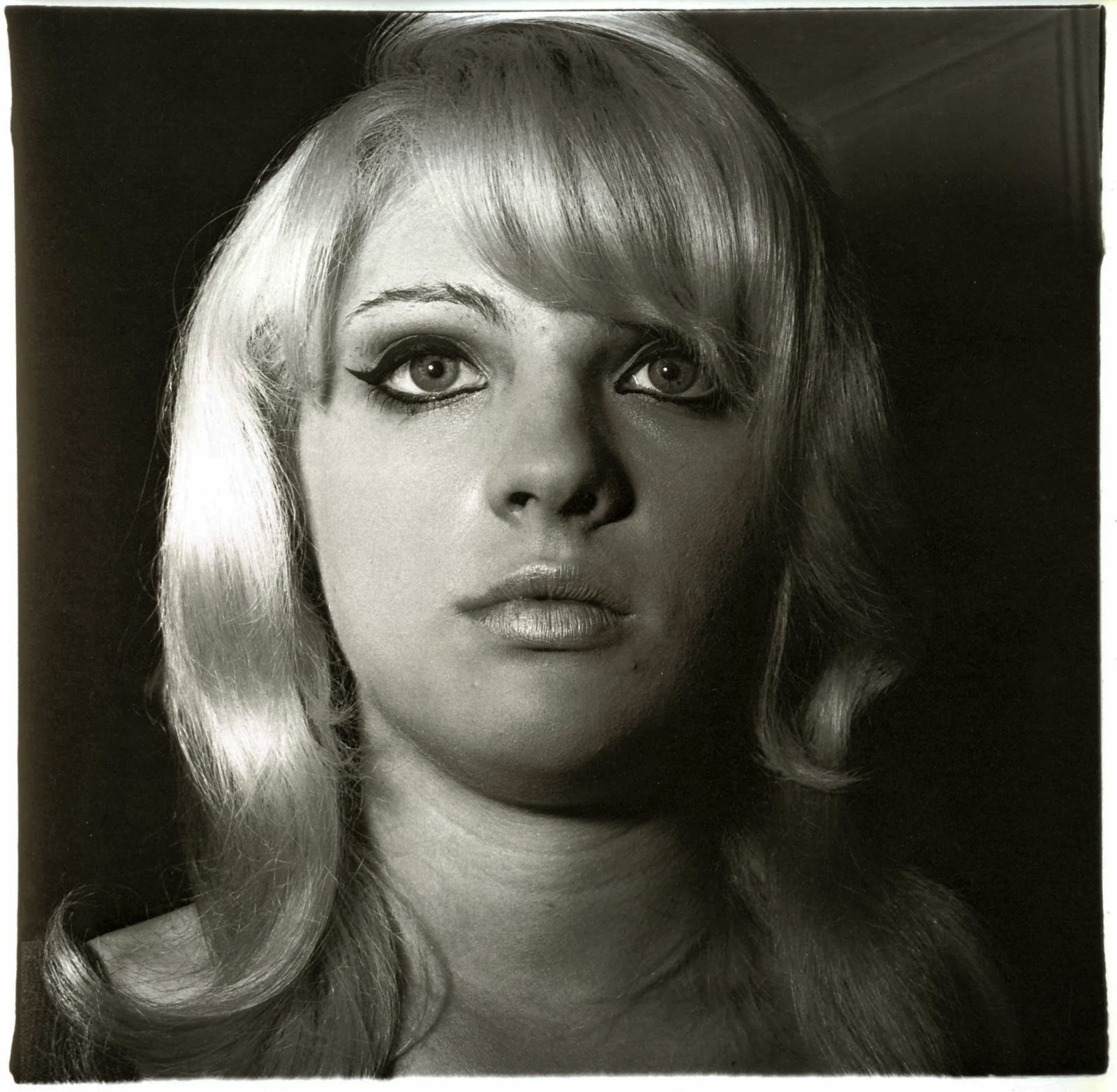
The first picture I remember truly knocking me out was Identical Twins by Diane Arbus. I was 18 years old and had just headed off to college. The image was on the cover of her book; I think I saw it in the bookstore on campus. Once I bought a copy, I could barely turn the pages, because I couldn’t believe there could be possibly more images that powerful and strange and breathtaking.

What struck me? Honestly, I think part of it has to do with the fact that these girls resembled pictures I’d seen of my mother, grandmother, great aunts and even pictures of me as a young girl. I saw myself in them.  If I used my imagination, I could invent a story about them that was similar to mine. I felt a kinship to them.

Arbus thrived on going to new places, putting herself in new situations, feeling uncomfortable, getting to know people she probably wouldn’t meet if it weren’t for her camera. She believed that most of us would never see many of the things she photographed if it weren’t for her pictures. She was fascinated by people, especially those who carried some kind of physical or psychological burden. What was Arbus telling us about herself that she felt a need not only to photograph these people, but also become their friends? You’ll hear words like voyeurism, exploitation, disturbing, unsettling and tragic when people talk about her work, but from the first time I saw them, these pictures inspired me with their formal beauty, their starkness, their secrets and their unflinching honesty. I thought they were intimate and brave. I was inspired by the way the subjects trusted her and revealed themselves to her.

There are two other photographers who have greatly inspired me: Helen Levitt and Mary Ellen Mark.

Helen Levitt is best known for the quiet, lyrical images she made on the streets of New York City in the 1930’s and 40’s. I have always been inspired by her tender and witty approach and her ability to formally structure an otherwise chaotic or messy scene. I got to meet Helen shortly before she died at the age of 95, and she told me that taking good pictures involves LUCK! For years she roamed the streets, mainly in Spanish Harlem, waiting to come upon scenes to photograph; she had nothing to do with making them happen and she basically felt that she was simply in the right place at the right time more often than not. She thoroughly enjoyed capturing moments that unfolded before her. I am inspired by her sense of wonder and discovery. Because of her Helen Levitt’s pictures, I truly believe in the magic of image making. Her work has taught me to look around very carefully and closely, but mostly, it has taught me to be open to what is in front of me, to trust my intuition and to be willing to take a chance on the subtle beauty and poetry that surrounds me.
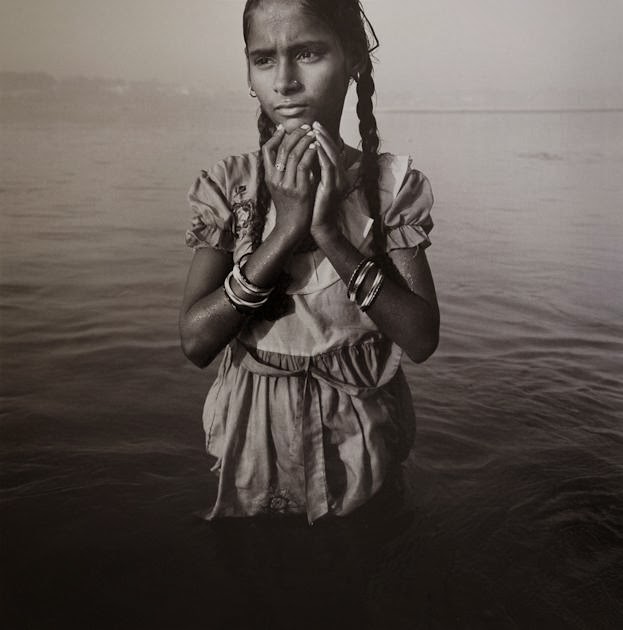
Mary Ellen Mark inspires me in yet other ways. She has portrayed - both journalistically and in her own personal projects homelessness - drug addiction, gypsies, circus performers and prostitution, among other things. Her style is direct and often formal, but she manages to skew the frame or use the edges in such a way as to make the images slightly unsettling. She believes that reality is always extraordinary. Like Arbus, Mary Ellen is interested in people on the fringes. She has always felt an affinity for people who can’t seem to catch a break. She is inspiring to me because she believes it’s important to acknowledge their existence and to give these people a voice. Her pictures represent a celebration of the human condition… something I aspire to accomplish with my own work.


So these three women inspired me early on and continue to inspire me today… each in a different way. One thing they all have in common is the ability to elevate something ordinary to the extraordinary. This, in a nutshell, is probably the way they have inspired me the most. Ultimately, I think knowing and studying their work has pushed me to try to become the best photographer I can be – to have a diligent work ethic, to learn how to speak with my own voice and to honor and celebrate the human condition. It’s true that many of my pictures, especially my early work, bring their pictures to mind. In preparing this presentation, I took the time to look back at several of my own bodies of work to see if I could easily find nods and references to photographs these incredible women have made. I was pleasantly surprised by what I found. I’m going to scroll through some of those I pulled, and you can see for yourself how the lessons I’ve learned from Arbus, Levitt and Mark have woven their way into the tapestry of photographs that I call mine.


Diane Arbus


Helen Levitt


Mary EllenMark


and me